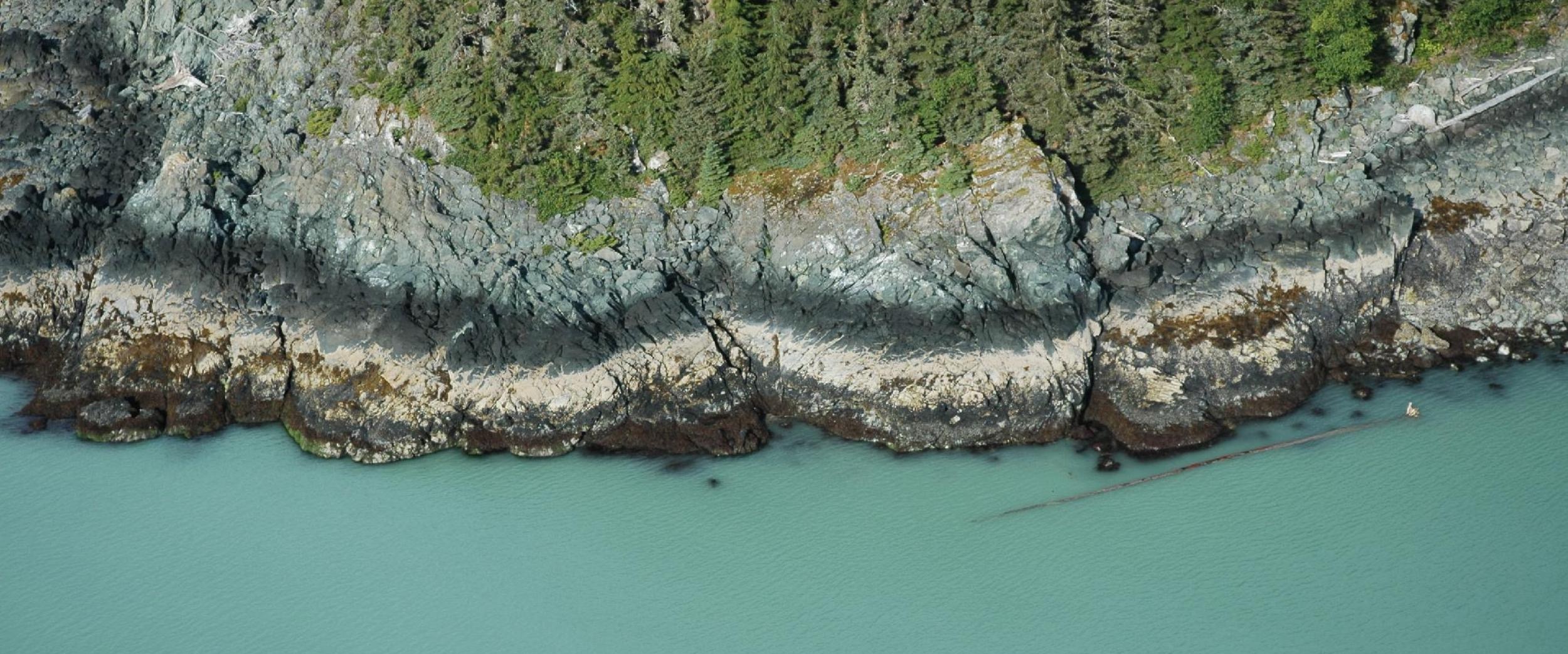
Lichens are organisms composed of two, and sometimes three, very different partners. Lichens are found on all continents, at all elevations, and in the wettest and driest climates. They are perfectly adapted to extreme environments and there are 15,000 to 20,000 different species of lichens. Most of the lichen is the fungal component (the mycobiont), which provides structure and holds water and nutrients. Because fungi can’t feed themselves, these “lichenized” fungi have evolved to incorporate photosynthetic green algae and/or cyanobacteria (also called blue-green algae), and some lichens have all three members. Thus, lichens are discrete organisms that have members from at least two (Fungi and Plantae) and/or a third (Eubacteria) of the currently recognized kingdoms.
Marine lichens are abundant in the high intertidal and supratidal where only the most salt-tolerant species can live. Lichens dominate this extreme zone and are one of the most striking and visible bio-bands in the intertidal. Because all lichens absorb moisture directly from the air, the local distribution of marine lichens is governed primarily by the amount of salt spray exposure they receive. Three common groups of marine lichens, found along Alaska’s shoreline, are briefly described here.
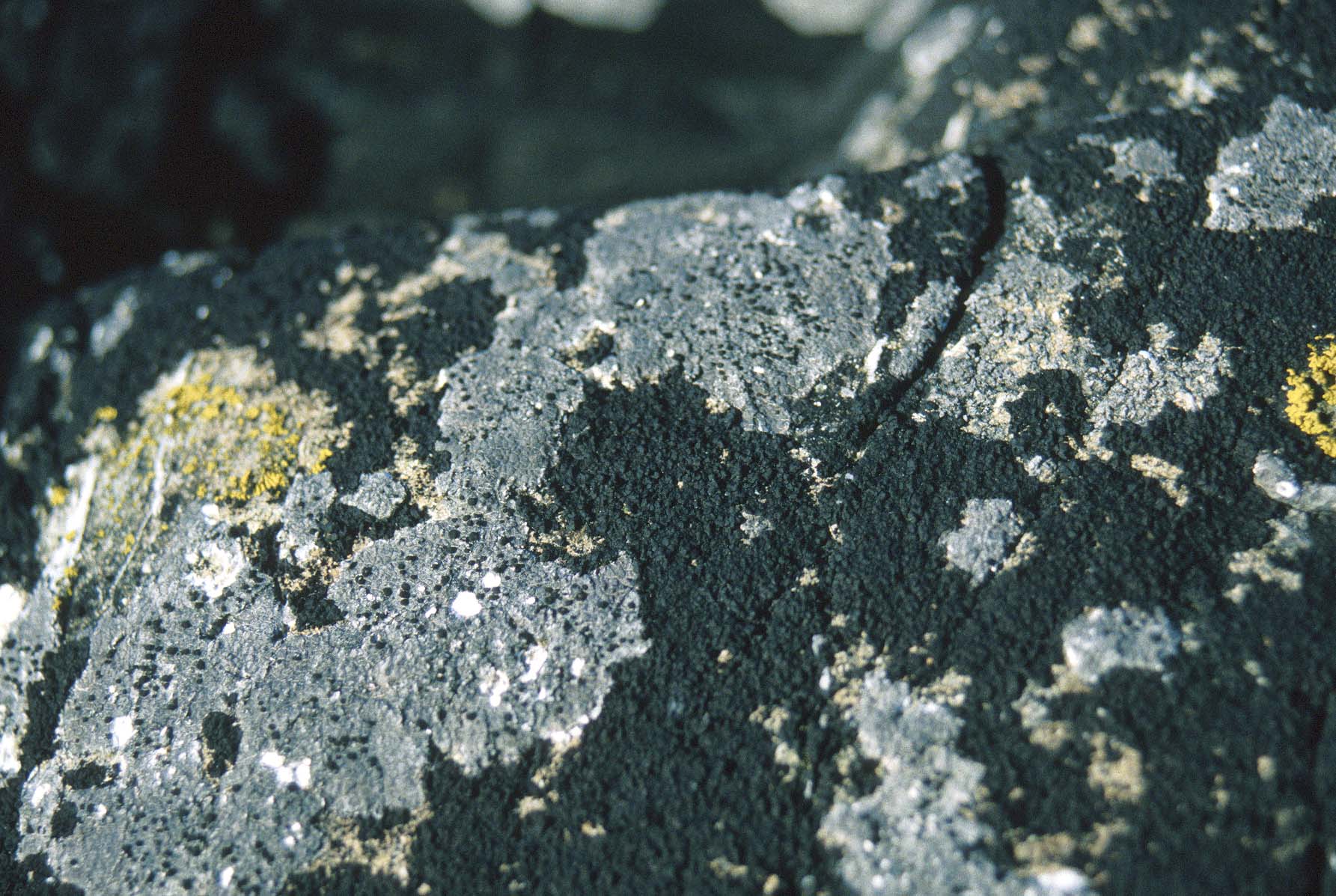
- Hydropunctaria maura and other Verrucaria-like species (Wahlenberg) C.Keller, Gueidan & Thüs Black seaside lichen
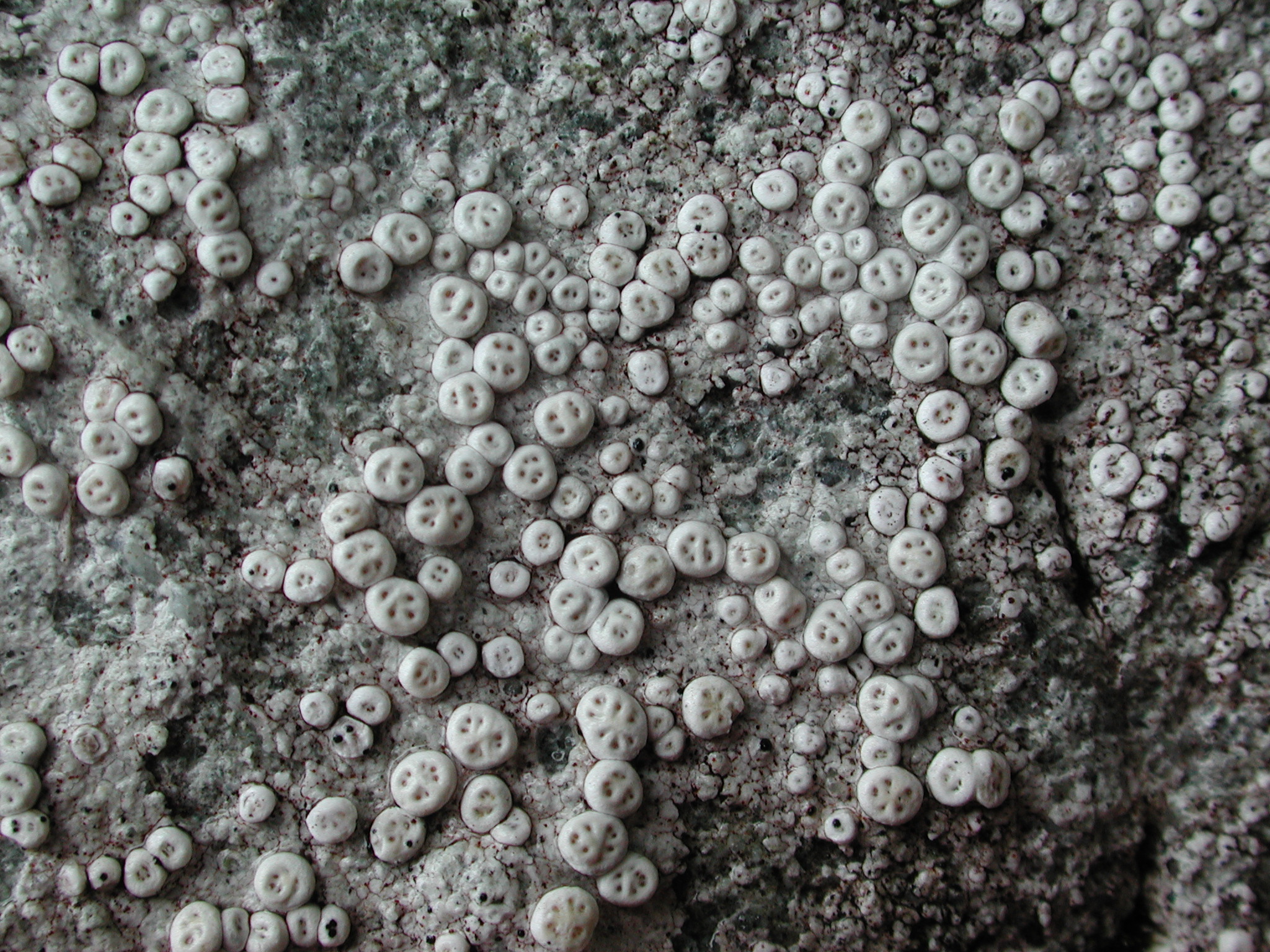
- Coccotrema maritimum Brodo White seaside lichen
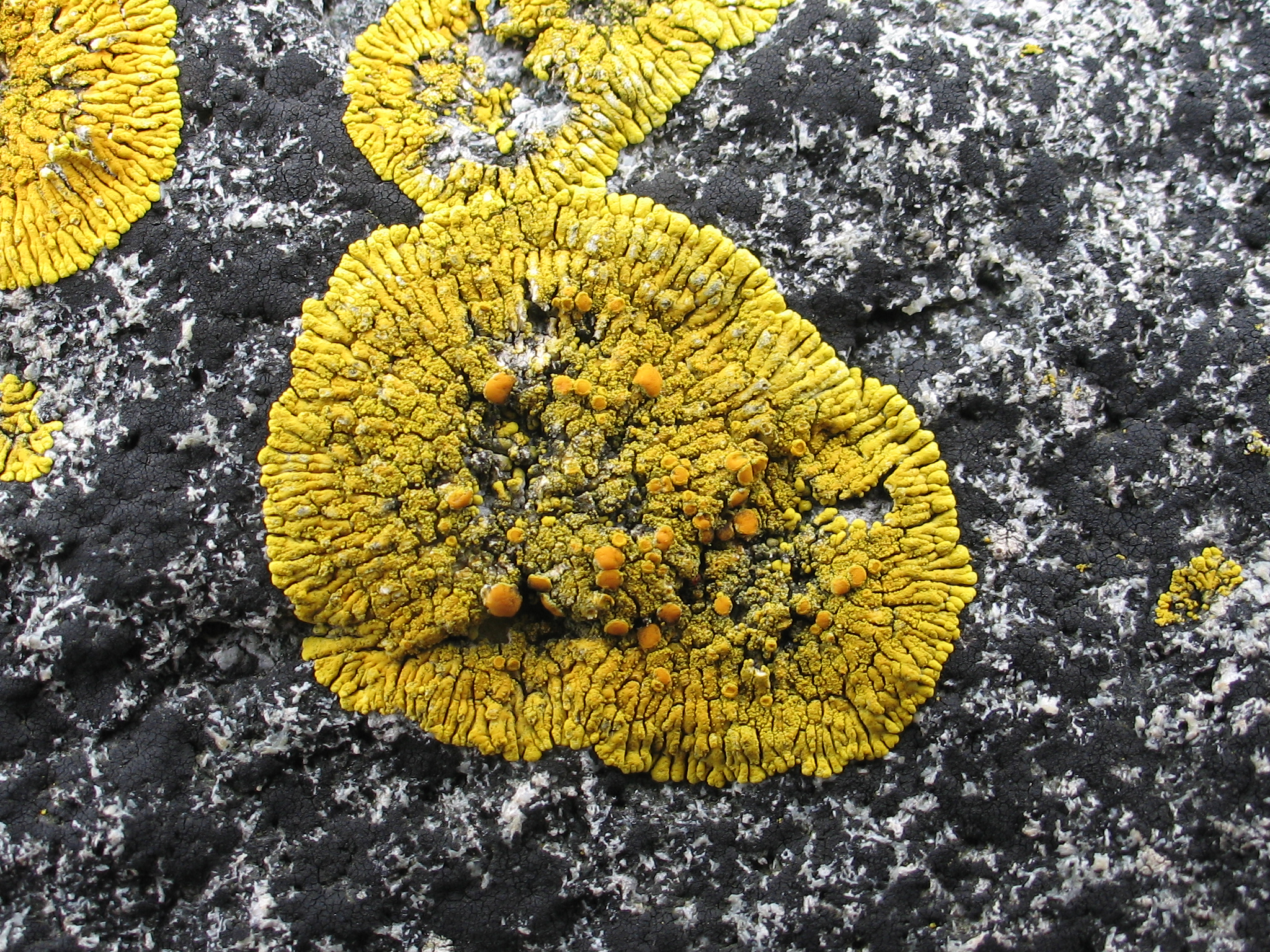
- Caloplaca spp. and Xanthoria spp. Orange sea side lichens
No species match .